46 residents speak on rural resort proposal, majority oppose zoning change
A packed room and nearly three hours of discussion marked the March 5 meeting of the Cheatham County Planning Commission, where 46 residents spoke during public comment on a proposed rural resort zoning change — with 34 voicing opposition.
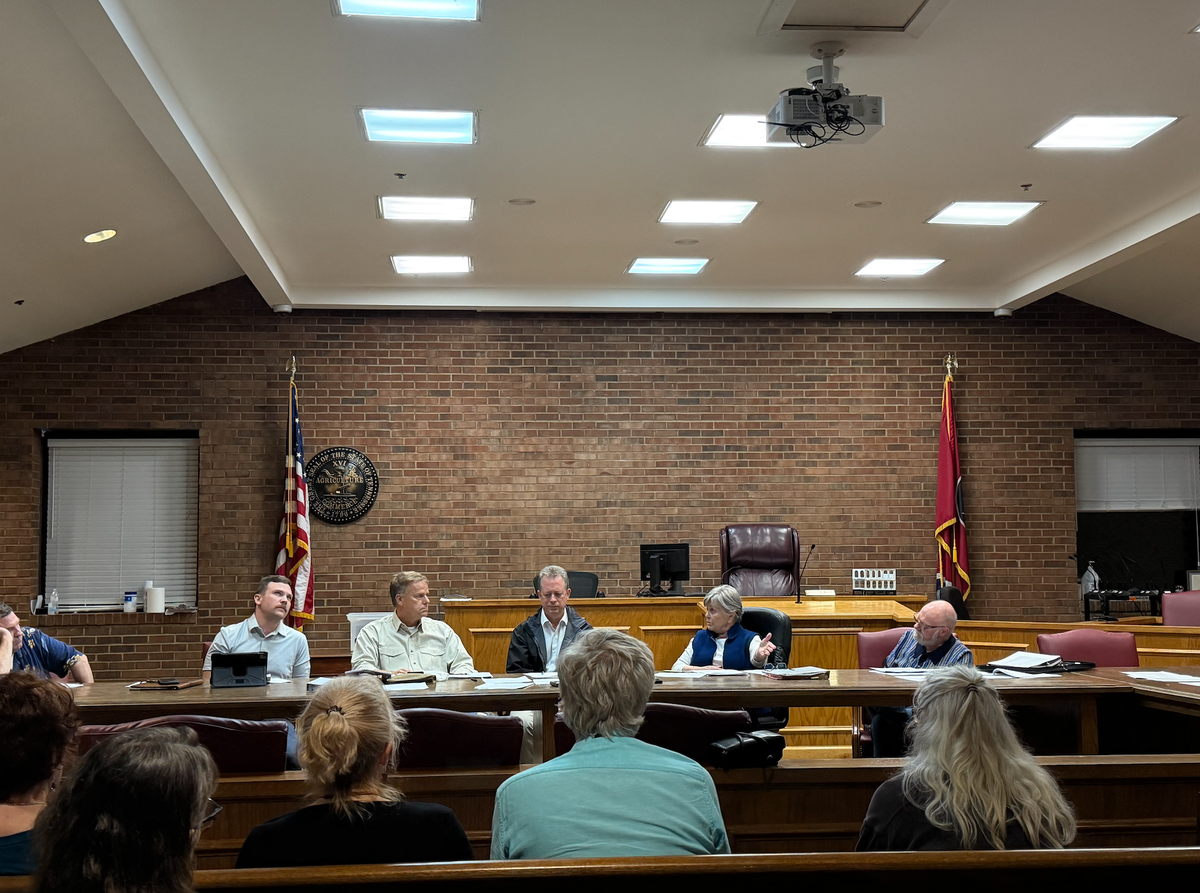
A packed room and nearly three hours of discussion marked the March 5 meeting of the Cheatham County Planning Commission, where 46 residents spoke during public comment on a proposed rural resort zoning change — with 34 voicing opposition.
After hearing public input and holding a lengthy discussion, the commission voted unanimously to continue reviewing a draft zoning amendment prepared by the Greater Nashville Regional Council (GNRC). Commissioners asked the regional planning agency to return on April 2 with a revised draft framework for what they referred to as an “Agricultural Planned Unit Development,” or Ag PUD, that could allow rural resort-style developments in the county.
The zoning discussion stems from a proposed project backed by developer Michael Hayes, CEO of C.B. Ragland, and investment group SV Capital, though the zoning amendment under discussion would apply countywide if adopted.
Public forum draws strong turnout
Public comment lasted more than an hour as residents lined up to share their thoughts, with many expressing concern about traffic, environmental impacts and changes to the county’s rural character.
Among those speaking was 10-year-old Boy Scout Jeremy Whitaker, who urged commissioners to protect the area near his home.
“This place is not just some empty land. This is my home,” Whitaker said. “I am the future of Cheatham County. Please don’t change the zoning.”
Whitaker said he and fellow scouts regularly spend time along the Harpeth River cleaning trash from the banks and have seen bald eagle nests nearby.
His mother, Jaci Whitaker, said she believes the proposed amendment is effectively being created to accommodate a single development.
“We cannot pretend that we’re talking about something else,” she said. “We’re talking about one development.”
She added that many nearby residents would actually prefer the residential development currently allowed under existing zoning.
“Give me the houses,” Whitaker said. “Give me the houses on five-acre lots with neighbors who want to live there forever instead of a transient population who come and just leave.”
Her husband, Jeremy Whitaker, also spoke in opposition, saying residents should be able to rely on stable zoning regulations.
“People who purchased property in Cheatham County should be able to have a reasonable expectation the zoning laws will remain stable and adhere to the county growth plan, not change upon request of a single developer,” he said.
Supporters highlight conservation and economic potential
While most speakers opposed the zoning change, 12 residents spoke in support, often arguing that a resort-style development could preserve open land while bringing economic benefits to the county.
Mike Hargis, vice mayor of Kingston Springs, told commissioners that developer C.B. Ragland hosted a tour of the property that morning for residents interested in learning more about the project.
According to Hargis, nearly 30 people attended the March 5 tour to see the land and hear about the proposed plans.
Updated draft amendment discussed
During the meeting, commissioners reviewed an updated draft zoning framework prepared by the GNRC. The latest draft includes several changes from an earlier version that was introduced in December.
Proposed standards include:
- Maximum building height: 35 feet (previously 45)
- Open space requirement: 50% of the property (previously 30%)
- Maximum density: 0.5 residential units per acre
- Setbacks:
- 30-foot front yard
- 10-foot side yard
- 200-foot buffer from neighboring properties
- Hotels: up to 80 rooms for projects larger than 100 acres (previously 120)
- Maximum commercial space: 50,000 square feet
- Outdoor music: prohibited after 10 p.m.
- Property Owners Association required to maintain internal infrastructure
The draft would also require a minimum project size of 40 acres, environmental considerations such as riparian buffers and slope protections, and traffic impact studies during the planning process.
Commission discussion continues
During an hour-long discussion following public comment, several Planning Commission members said they want more information about how other counties handle similar developments and whether a new zoning category would be appropriate for Cheatham County.
While the commission held a quorum with five members present, four Planning Commission members were absent for the second consecutive meeting – including District 6 (Kingston Springs) representative Brian McCain.
Some members expressed concern that the amendment appears tied to a single proposed project, while others argued that creating clear rules could help the county manage future development.
“I am concerned because we've only had one applicant come to us wanting this. And I’ll say it again – if we had lots of people coming and asking for this, I’d see the need,” District 4 Planning Commission member Brenda Montgomery said. “I believe that once [the land is] gone, it’s gone.”
Ultimately, the commission voted unanimously to ask GNRC to return with formal draft language for an “Ag PUD” zoning amendment reflecting the discussion.
The proposal is expected to return to the Planning Commission for further review on April 2, after which it could eventually be forwarded to the Cheatham County Commission for consideration.