Q&A: Meet Dr. Aniya Farmer, Democratic candidate for Tennessee House District 78
Voters will choose a new representative for Tennessee House District 78 this year following the retirement of longtime Rep. Mary Littleton. Ahead of the election, the Gazette asked each candidate the same series of questions about the issues facing District 78. Below are Aniya Farmer's responses.
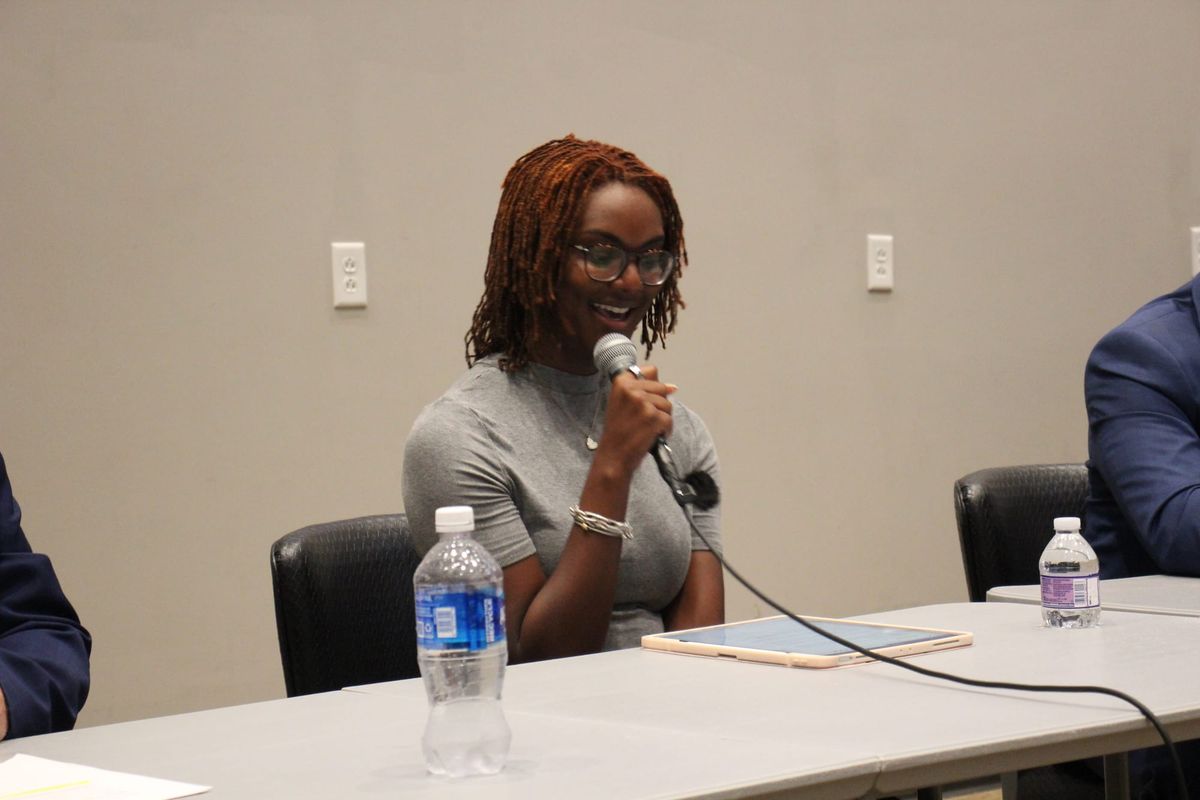
Voters will choose a new representative for Tennessee House District 78 this year following the retirement of longtime Rep. Mary Littleton, who announced she would not seek reelection after serving the district since 2012.
District 78 includes all of Cheatham County and the eastern portion of Dickson County. Three candidates are seeking the seat: Republicans John Louallen and Perry Keenan, and Democrat Dr. Aniya Farmer.
Early voting for the Aug. 6 state primary begins July 17 and runs through Aug. 1. The winners will advance to the Nov. 3 general election.
Ahead of the election, the Gazette asked each candidate the same series of questions about the issues facing District 78. Below are Aniya Farmer's responses.
KSG: Why are you running for District 78?
Farmer: I'm running for District 78 just because I saw a lot of policy that is impacting our families and students in schools. There were no democrats running, so I thought, ‘I'm a public servant, I will step up to the plate.’ If I don't win, I still have this opportunity to get people civically engaged. I feel like people want to be civically engaged, but it's a little challenging. So my goal is to get more people out to vote, and I want to get people registered to vote.
We have people who are registered to vote, but are they going to vote? With rural communities, it's difficult for them to get to their polling places. So for the November 2 election I partnered with a party bus company in Nashville, Tennessee, so that we can get people partying to the polls. I'm really excited about that, but I want to make sure voting is accessible for everyone. I would love to see at least 20% of our population come out to vote in Cheatham County. If I have to come pick people up, we have to get out and vote. It's important.
KSG: What are the top three issues facing District 78?
Farmer: Education is number one. I went to private school. I went to Lipscomb Academy and graduated from there, but I just don't think that we should be taking taxpayer dollars to fund kids going to private schools. We have to put our money in the public school system, and we would definitely see a great return. There are kids that are leaving with associate's degrees in Cheatham County. We're doing great things. Dickson and Cheatham County are underfunded. Money needs to be redirected to there. We also need to focus on teacher retention as well. I think that's important. When there's a lot of turnover, we're never going to make the progress we really want to see.
My second concern is health care. A lot of funds are not going to rural healthcare. We've been blessed that we haven't had any hospital closures – we still have the one on Main Street in Ashland City, they're building one up in Pleasant View, and I think that's important because nobody wants to drive to Nashville or try to get to Clarksville or Springville when they're in a crisis. So, for us to have those health facilities, it's really important, but we also need to make sure they're able to stay funded.
The third one is making sure our communities are safe.
KSG: How should Tennessee address school funding and public education?
Farmer: I think we have to really invest in our teachers and in our students, so that we're not seeing this crazy turnover of teachers, and it's hard to do that when people are making policies and they've never been in education, they don't know what's going on, you're not in the classroom, you're not in the school building, so I think that would be one piece that I would really like to work on first, so that we can keep our teachers in the school. I still do want to work on the school vouchers, I think that's really important. I get that a lot of our rural districts are pulling for those school vouchers so that kids can go to private school. If we're being honest, a lot of people in the rural districts can't even send their kids to private school. It's expensive, so these are working families trying to survive, and tax money is going to send kids who live in Williamson County to private school, or kids who live in Davidson County to private school.
Knox County, they're killing it. Their schools are funded. They've made significant progress. They have the early college model there. They're taking the pre-ACT in fifth grade. I would love to take what's happening there and share the news with other rural counties that this is what your schools can look like. This is what student achievement can look like when your schools are fully funded.
KSG: What role should the state play in managing growth and development?
Farmer: Let me say this: growth is inevitable. We're going to grow, but there is growth that happens too fast, and then you crash and burn, you're not able to keep up with it, but then there's that slow and steady growth. When I think of the growth of Cheatham County, that needs to be left more to their local officials. I don't think that's something that needs to happen at the state level. I would like to see Cheatham County grow in a way that's going to benefit Cheatham County and its residents, not drive up the taxes, and then they're being pushed out. State level should not have to deal with that. That's the local level.
The state could work with those local leaders for grants. I would love to see a community center in Cheatham County, that's where we can get with the state and try to find some grant money, or get with other organizations like Blue Cross Blue Shield, they do one for like playgrounds to get people back outside. Yes, but as far as saying I need my state representative to help with growth and development, I think we have to leave that with our local officials.
KSG: How should Tennessee approach transportation and road improvements?
Farmer: There are roads that are maintained by the state, which state representatives can definitely help out there. But then there's your roads that are maintained by your local officials. This is where some education has to come into play between your state and county roads. And that's where being civically engaged comes into play.
KSG: How would you work across party lines if elected?
Farmer: I think town halls are really important. I'm not working for one specific party, I'm working for everyone in District 78 so having those town halls and continuing to have dialog with people, that's important. That's what's going to continue to help District 78. I don't want anyone getting elected, and then we don't hear from them until it’s time for them to get reelected. I want you to come to us. You're a public servant, serve the people – set up a town hall, attend, go to a church service, and go to these school board meetings. I want them to really be involved with District 78 so that we can continue to make progress, and so that is something that I would really stress, is having town halls.
KSG: What experience best prepares you to serve in the Tennessee House?
Farmer: I'm gonna say my experience with IGNITE has been very helpful. I started that in college, and I'm still connected with them today. I've also worked with the Andrew Goodman Foundation, and they're all things civil rights and just any policy that affects voting. I have worked nonstop up on Capitol Hill with Awake. Being able to work with different organizations to create policy, like working with the Black Caucus in Nashville, working with state representatives such as Vincent Dixie.
I have a good amount of experience, but I think one of my things that sets me apart from the other candidates is my education background as an educator, and then also going through school, I learned to be research heavy. For example, if this is something we're struggling with here in Tennessee, what other state is doing it well, and what can we take from that?
I am younger, and I think for some people, it's a red flag, but with me being young, I'm hungry, and I also want the best for my district.
KSG: What committee assignments would you seek and why?
Farmer: I'm getting my MBA at the University of Kentucky, and I've learned a lot. I've liked all of my projects that I have done for my MBA around politics and policy, and also audits and financial reports at the state and local level. So, Finance and Means Committee number one.
Number two, is higher ed. I'm an adjunct at the University of Kentucky. My actual doctorate was in higher ed, so I feel like higher ed would be my number two.
K through 12 would be number three. I could bring my expertise there. I pick places where I'm an expert.