Q&A: Meet Perry Keenan, Republican candidate for Tennessee House District 78
Voters will choose a new representative for Tennessee House District 78 this year following the retirement of longtime Rep. Mary Littleton. Ahead of the election, the Gazette asked each candidate the same series of questions about the issues facing District 78. Below are Perry Keenan’s responses.
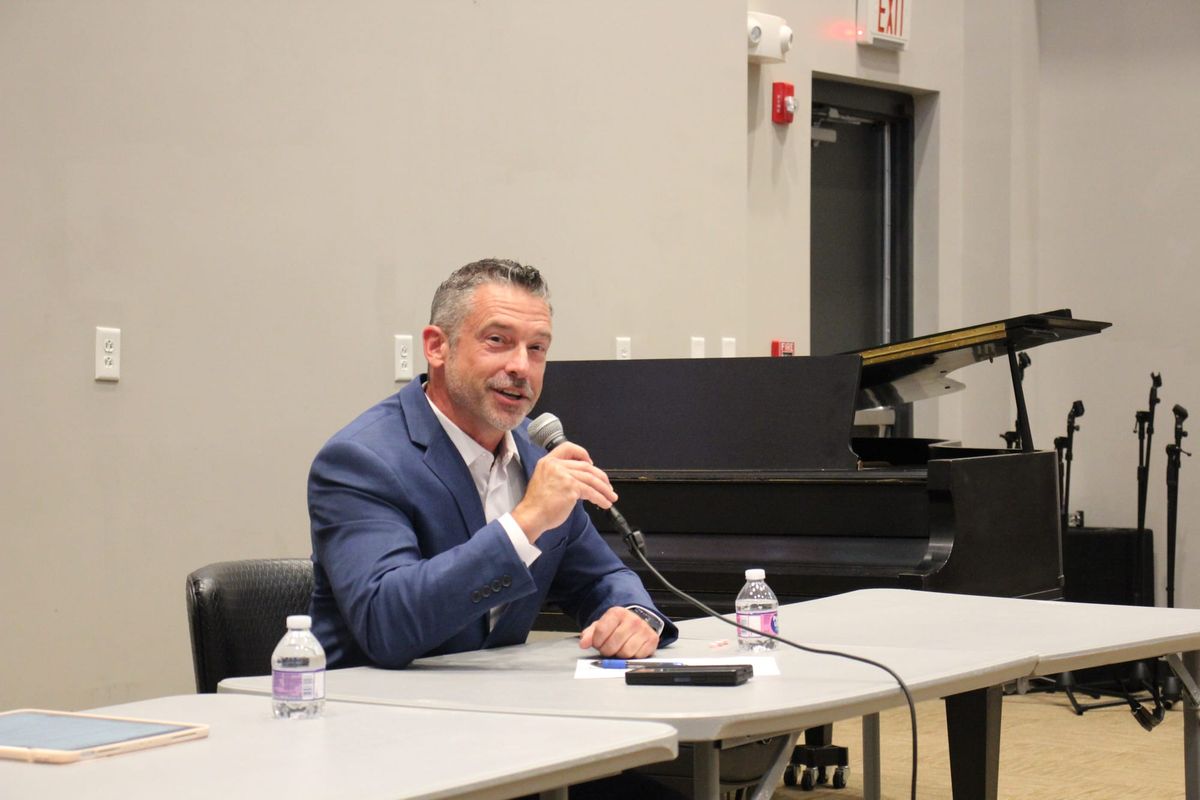
Voters will choose a new representative for Tennessee House District 78 this year following the retirement of longtime Rep. Mary Littleton, who announced she would not seek reelection after serving the district since 2012.
District 78 includes all of Cheatham County and the eastern portion of Dickson County. Three candidates are seeking the seat: Republicans John Louallen and Perry Keenan, and Democrat Dr. Aniya Farmer.
Early voting for the Aug. 6 state primary begins July 17 and runs through Aug. 1. The winners will advance to the Nov. 3 general election.
Ahead of the election, the Gazette asked each candidate the same series of questions about the issues facing District 78. Below are Perry Keenan’s responses.
KSG: Why are you running for District 78?
Keenan: I have a heart and passion for this district. I have a heart and passion for serving. Growing up, I never really thought about politics. I watched the news with mom and dad, and always stayed on top of politics and what was going on. But I never really saw myself in that role. And then had an opportunity in 2003 to start taking it a little more seriously and had volunteered on some campaign stuff here and there and found out how much I really loved it.
I love this district. I spent time as city council and vice mayor in Pleasant View from 2004 to 2008, and then took a little time off from politics. And then in 2012, I had an opportunity to kind of get back in, and said we're gonna throw our hat in the ring for mayor in the town of Pleasant View, and if that's where God wants me, then we'll just we're gonna work our butts off to get it done, and if not, that's okay. So I got elected in 2012, and again in 2016, and right now I've got about 15 or 16 years total of public service for Cheatham County specifically. Being the only candidate in this race that was born and raised in this district, I really feel like I have a lot to offer.
KSG: What are the top three issues facing District 78?
Keenan: The things that I'm hearing the most are we want to make sure that our roads and our infrastructure are staying up to where they need to be. And right now, there's some real need, especially through TDOT and the funding sources for Highway 49 and improvements on Highway 48. When I took over as mayor in 2012, one of the very first meetings I had officially was with TDOT to discuss the improvements that they were going to be making on Highway 49. That was in 2012. Originally, they were saying, ‘Oh, we're going to be somewhere around 2016 to kick this off,’ and then it was 2018, and then it was 2020, and then COVID happened, and then all bets were off. And now, last conversation is they're talking about starting some of this stuff in 2032. That's 20 years after my first meeting with TDOT. I want to be able to work the relationships to try and push our district and the infrastructure needs to the front of the line, and not just be the thing that people keep saying, ‘Oh, let's just cheat them in Dickson County, and it's fine.’ It's not fine. I want to push us to the front.
One of the other things that I hear a lot about is obviously our schools. Our public schools need to make sure that they are not losing funding. That they are going to maintain the funding resources that they have on a state level, and that's key. Our public school is the largest employer in our county for Cheatham County, and I suspect it's probably also the same for Dickson. We've got to make sure that they have the right funding and resources on a state level, and that's something that we've got to take very, very seriously.
Lower taxes. I would love to see us go in and look at a study that says we have an opportunity to either reduce or eliminate the grocery tax completely. That is something that is an equal opportunity tax that goes throughout this district and throughout the state. No matter what class you're in, whether you're making millions of dollars a year or if you're living on $500 a month, whatever it is, we all have to pay a grocery tax, and so if it's something that we can look at trying to give some help and relief to Tennesseans, then we need to do that. A study going in and looking at the fiscal ramifications of being able to pull money off of that and pull it from somewhere else is something that I think at least warrants a very serious discussion.
KSG: Mary Littleton represented this district for more than a decade. What does it mean to have her endorsement? What would you say to constituents who are looking for a change from Rep. Littleton?
Keenan: It's a humbling honor to have her support and her endorsement in this campaign. While she and I didn't agree in the very beginning, we both learned real quickly that we could trust each other, and we have worked incredibly well over the years. Whether someone agrees with her or not on all of the things that she's voted for or not voted for, the one thing that you can't take away from her is the fact that she's been an absolute trailblazer in this district. She, to the best of my knowledge, is the only female that has served this district for as long as she has. For a female to come into this race and beat six other guys out and win this is pretty impressive in and of itself. But then you look at the way she's led and the things that she's done. Again, whether somebody agrees with all of her votes all the way through or not, it's still pretty impressive.
KSG: What role should the state play in managing growth and development?
Keenan: It’s really it's the tale of two counties. When you talk about growth and development in Dickson County, the leaders there seem to be a little more progressive-minded when it comes to wanting limited growth, but making sure it has a positive impact, making sure that it's going in the right places, and making sure that it's going to be an overall net positive for Dickson County, whether it's residential growth or if it's new commercial that's coming in, or an opportunity to bring in something industrial that's going to provide jobs for their part of the district. The leaders there really seem to be a little more dialed in on that from the standpoint of they're really open-minded to it. Here in Cheatham County, specifically on the south side, one of the things that a lot of elected officials here in Cheatham County are having to go back and really reevaluate their stances is on growth itself. We had an opportunity for a developer to come in and do a project that everybody here in Cheatham County affectionately calls the rural resort. You had such a vocal opposition to that project as a whole that it really caught a lot of elected officials in Cheatham County off guard. And so many of your city councils and your city mayors are now going back and reevaluating and saying, ‘Well, if growth is coming because of our proximity to Nashville, what does it look like? How are we going to handle it? Do we want it? Do we not?’ So I think that Cheatham County is going back and having to reevaluate that on a large scale to see if it's something that they really are even interested in or not.
KSG: What other issues have you seen that are different between the two counties in District 78?
Keenan: It's been really eye-opening to see the stark differences of need between Cheatham and Dickson counties, and of course, there's a lot of things that are very similar. We all want to live in a safe community. We all want to make sure that our our schools are good. We want to make sure that we've got great infrastructure and good roads to drive on without potholes.
But one of the things that has really come to light is the concept of recovery homes and what that looks like in Cheatham County versus Dickson County. For example, in Dickson County, they've got a couple of people that have recovery homes scattered throughout the county or throughout the city, and the officials are really struggling right now with how do we find that balance between fitting a need – and it is a need. Unfortunately, Middle Tennessee has a horrible problem with opioid epidemics and the crises that we're seeing. So, the need that Dickson has is much like Cheatham, where we've got to have an avenue for recovery homes of some description, but how they're operated in the two sides of the district are completely different.
In Dickson you've got a concern with citizens that are saying, ‘Well, now they've put in a recovery home next to my house in my neighborhood, and I'm worried about it hurting my property values. I'm worried about being safe. What happens if I go to sell my house? If anybody would buy my house because it's next to a recovery home?’ What does it look like when these people get out of the program or if they try to leave the program? What happens to those folks? Do they become homeless? Do they get a bus ticket to go back home? What do we do? Because the majority of the people that are in the recovery homes, it appears that they're not residents of Dickson. What happens when it's time for them to leave and they graduate from the program? How do these people assimilate back into society and be good stewards of the communities that they're living in?
For Cheatham County, it's starkly different in that the recovery homes that we have here have built a phenomenal relationship within the communities that they're in, and the elected officials that they work with. And what you'll find is that any time there's even the slightest hint of an issue, more often than not, an elected official can call the leader of that particular recovery home group, and they're on it because those guys don't want to burn any bridges. They like the reputation that they have here in the county of being upstanding citizens and being helpful and working together closely with the leaders within your community. For example, we've got some friends that live close to the river. About a year ago, floodwaters were coming in, and the river was rising, and their house typically floods on the lower level, and so it was one of those freak rain things where it just all of a sudden was coming up. They were able to call one of the recovery homes, and the recovery home loaded up a white van full of guys, and within 30 minutes, those guys were on site helping those families on that street, moving furniture, getting things up to a higher point. That's the kind of relationships that you want to be able to build.
And I'm not hearing that Dickson County and some of the recovery organizations that they have there have built that same level of trust and loyalty, and honestly, respect. So I think there's a lot of things from that standpoint that some of these organizations in Dickson could probably learn from Cheatham County and the way that they're doing it.
KSG: What can the state do to support volunteer fire departments, EMS services and rural emergency responders?
Keenan: One of the best resources that we have on a state level is making sure that we're staying in constant contact with the local firefighters associations that come to the Capitol or they come up to the hill and and they want to meet with the different elected officials there, the state representatives, the state senators, to say, ‘Hey, these are some these are some things legislatively that are coming up that we would like for you to support, or these are some things that we would like to get your input on, or these are some positions that that we feel are really key, and we need to we need to see if you have any questions.’ Funding is also really important. The other thing, grants, whether they filter down to us on a federal level down to the state that we can help with, or just making sure again that that open line of communication for our police, fire and EMS is there.
KSG: What experience best prepares you to serve in the Tennessee House?
Keenan: It would be easy for me to beat my chest and say I have the most experience out of anybody running in the race on either side of the aisle. But I really and truly have to lean into the fact that I've got between 15 and 16 years total public service inside this district, and that's something that I can draw a lot of knowledge back from, and bring that level of leadership to a state level.
One of the things also that we're really proud of is the fact that state leadership has rolled up in supporting our campaign. Our Majority Leader William Lamberth – he's endorsing our campaign. Of course, Mary Littleton, she's retiring, but she's endorsed our campaign. You've got Clark Boyd, who is the Republican Party majority whip. He's endorsed our campaign. Retiring State Representative Jeremy Faison. I work well with Michael Langford out of Clarksville and Chris Lanier out of Clarksville. State Senator Kerry Roberts has endorsed our campaign, and what that translates to in the district is we've built a coalition of support to allow me to hit the ground running on day one that none of the other candidates can do. That's not to say that another candidate couldn't potentially get up to speed after a couple of years, but it takes time to develop those relationships, and it takes time to build a level of trust where they feel like, as leadership, they can come to you. But at the same time, if you've got something that you feel like they're supporting, and you're like, ‘Hey, this is not going to be a good vote for my district, and we need to sit down and talk about it because I can't support this,’ it gives you that ability to sit down and have those conversations in a very non-threatening way, and gives them an opportunity to hear your heart and understand more about your district because let's face it, William Lamberth does a great job in his district, but he doesn't know as much about Cheatham County and Dickson County as Mary Littleton did. So having having those relationships on a level where you can sit down and have those conversations is key, absolutely key.
Between my 16 years of experience in public service and also the level of relationships that I have with leadership up at the Capitol, that gives me a real leg up, not just on the competition, but again allows me to hit the ground running on day one.
KSG: What committee assignments would you seek and why?
Keenan: With my experience, especially on a local level with small government, it's not a sexy committee to be a part of, but there there is a committee that they have that specifically deals with government organization, government relations for all of your local city, county type stuff. I speak that language because I've done it for so long, and whether it's working with the city of Dickson, or Burns, or White Bluff, or Kingston Springs, or Peagram, or Ashland City, or Pleasant View, I know these mayors because I speak their language. I know the struggles that they have on small levels of making sure that they stay on budget. And what do we do about our property taxes? And should we have a property tax or an increase? How are we going to fund our fire departments? What are we doing to make sure that our our our police are being funded to the extent that we need to get them funded? So I understand the struggles of of being a mayor and speak that language. I really feel like I can be an asset and a great backbone for these guys on a state level.
The other one would be the education committee, Scott Cepicky and and the others that are on that team, they do a really good job of trying to dial in. But education is really difficult right now. You've got people that are on all kinds of sides of all kinds of issues with this, and everybody wants the same goal, and that is to have what's best for their kids. But you've got a lot of different opinions on how we get there. I would love to be a part of the education committee and see if we can't help dial in because honestly, Cheatham County is right in the middle. It's very average on its rankings, or even in some rankings, it's below average. And that's not to say that we have bad schools, but it's been that way for far too long, and I'm not a guy that's happy with average. I want to see us be in the top 10 or 20 percent in the entire state, and right now on several of the rankings, we're listed as just middle of the pack. We rank like 71st out of 149. I'm not okay with that, and I don't think the parents that send their kids to public schools here are okay with that either. They want to know that Cheatham County has an amazing school system and Dickson County has an amazing school system, and we are absolutely going to rock it.