‘We don’t want them’: Pegram begins discussion on data center regulations
Nearly 100 residents packed Pegram’s Planning Commission meeting Nov. 9 as town officials began discussing how to regulate data centers — a type of development that has also prompted debate in Kingston Springs and at the county level.
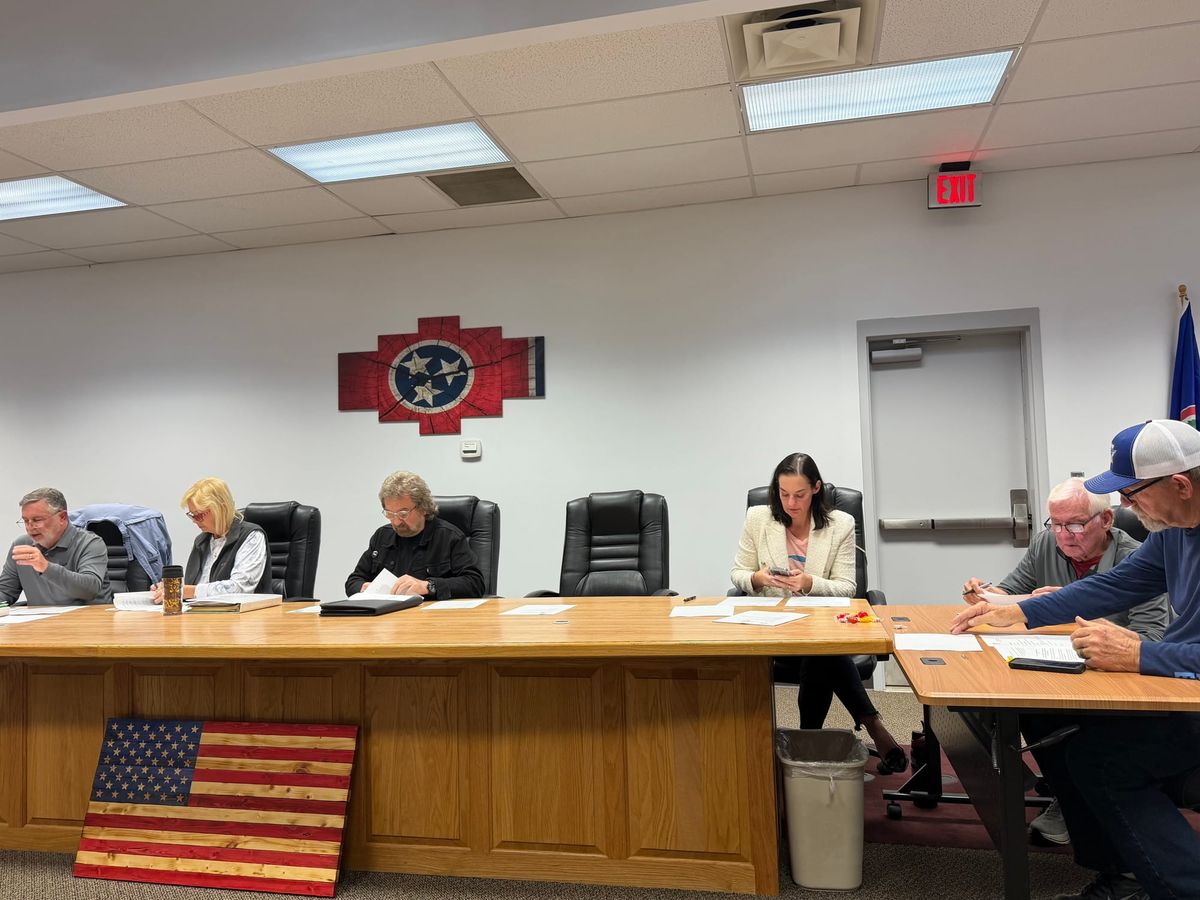
Nearly 100 residents packed Pegram’s Planning Commission meeting Nov. 9 as town officials began discussing how to regulate data centers — a type of development that has also prompted debate in Kingston Springs and at the county level.
No data center proposal has been submitted to the town, and no specific project is currently under consideration, Planning Commission Chair Gene Hannah emphasized at the start of the meeting. The discussion was intended to help Pegram prepare regulations before a developer approaches the town.
“We are not here tonight to put a data center anywhere in the town of Pegram,” Hannah told residents. “Nothing has been presented to us. Nothing. There’s no data center that we know of looking to come here.”
The discussion comes as other local governments consider how to address the potential development of large data centers, which house computer systems and related infrastructure and can require substantial amounts of electricity, water and land.
John Louallen, Pegram’s former mayor, urged officials to begin the discussion and said he believed it was a matter of time before a developer approached Cheatham County or one of its municipalities. He said he plans to ask the town’s Board of Mayor and Aldermen in December to consider a moratorium while the Planning Commission researches its options.
Another resident raised concerns about the potential effects of a data center near the Harpeth River. He asked what a facility’s electricity and water demands would mean for residents, who would pay for infrastructure such as transmission lines and substations, and how the town would address noise from cooling equipment, transformers and backup generators.
He also questioned how much permanent employment a data center would provide and whether potential tax revenue would outweigh the costs and impacts to residents.
“Before moving forward, we deserve complete, transparent answers regarding electricity, water usage, environmental impacts, infrastructure costs, job creation, and long-term benefits,” he told the commission.
Other concerns raised during the meeting included potential impacts to wildlife, the river, nearby residents and the town’s rural character.
Pegram considers interim regulations
The Planning Commission invited representatives from the Greater Nashville Regional Council (GNRC) to explain options for regulating data centers. GNRC representatives said communities can consider a zoning overlay, amendments to existing zoning districts or other changes that establish where data centers may be allowed and what standards they must meet.
An overlay would add requirements to existing zoning districts rather than replace the town’s current zoning map. Those requirements could address the size and type of facilities allowed, as well as design and development standards.
GNRC representatives said the first step may be for Pegram to establish a definition of what it considers a data center. A small business server room, for example, is different from a large, campus-style facility, and the town would need to determine what types and sizes of operations its regulations should cover.
Town officials questioned where a data center could be located under Pegram’s existing zoning map. One commissioner said the town has industrial districts but no property currently zoned industrial.
GNRC representatives clarified that Pegram does have an industrial zoning classification, I-1, but no parcels are currently zoned in that district. They suggested one possible short-term approach would be to define data centers and make them a conditional or permitted use within the I-1 district. A developer would then have to seek a zoning change before pursuing a project.
That approach could give the town time to develop more detailed regulations, but it was presented as an option for further consideration, not an adopted policy.
A GNRC representative also cautioned that broad moratoriums can raise legal questions, making it important for the town to work with its attorney as it considers how to regulate the facilities.
The commission agreed to ask GNRC to return in December with a definition of data centers and possible interim language the town could consider adding to its zoning ordinance. The representatives also discussed reaching out to the University of Tennessee’s Center for Local Planning, which has developed sample data-center zoning regulations and offers planning resources to local governments.
No data-center regulations were adopted during the Nov. 9 meeting.
How other local governments are approaching data centers
Pegram’s discussion follows months of data-center debate elsewhere in Cheatham County.
Kingston Springs officials approved a 12-month moratorium on applications for high-resource-usage facilities, including potential data centers. The moratorium is intended to give the town time to study and develop permanent regulations for projects that could place significant demands on electricity, water or other public infrastructure. Town officials have said the measure is not a ban and that no application for a data center or other high-resource facility had been submitted.
At the county level, commissioners amended the zoning resolution in December to define data centers and classify them as “extensive impact facilities,” limiting them to property zoned I-2 or I-3 industrial. County officials have since been working on additional development standards addressing issues such as setbacks, buffers, noise, lighting, utility capacity and decommissioning.
The Cheatham County Planning Commission’s Dec. 3 agenda includes another discussion of data centers, continued from its November meeting.
For Pegram, the next step is to determine what regulations the town can put in place before a proposal is submitted. The commission plans to continue that discussion on Dec. 14.