Opposition dominates Jan. 8 forum as Cheatham planners again delay rural resort decision
Public opposition to proposed rural resort regulations dominated a Jan. 8 Cheatham County Planning Commission meeting, where residents again raised concerns about environmental impacts and long-term land use as commissioners deferred the issue for the second consecutive month.

Public opposition to proposed rural resort regulations dominated a Jan. 8 Cheatham County Planning Commission meeting, where residents again raised concerns about environmental impacts and long-term land use as commissioners deferred the issue for the second consecutive month.
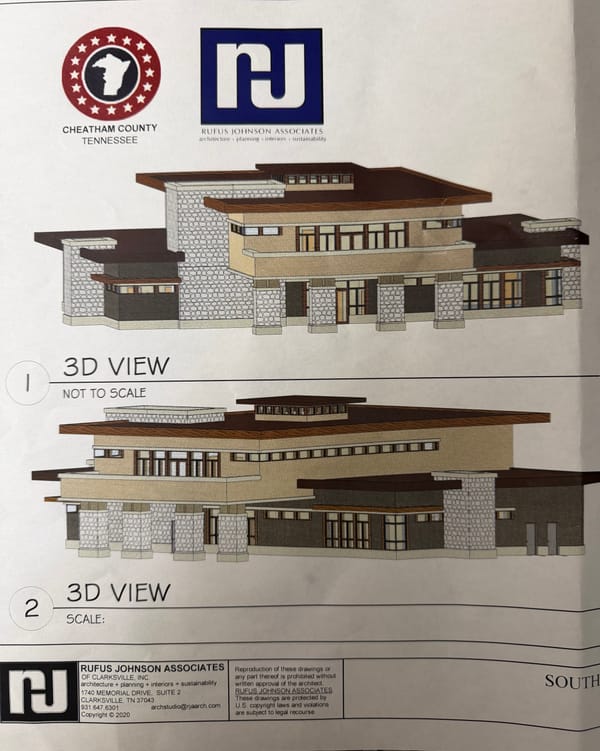
During roughly 30 minutes of public comment, 19 people spoke, with 15 opposing the proposed changes and four speaking in support. Michael Hayes – a Nashville developer – had previously submitted a proposal to change the county’s zoning laws for rural resorts after setting his sights on 560 acres near the Narrows of the Harpeth for a $250 million resort. The Planning Commission voted in October 2025 to deny Hayes’ amendment and it was pulled from the County Commission’s agenda. Hayes' project has drawn strong resistance.
As previously reported by the Kingston Springs Gazette, Hayes proposed a luxury resort in Kingston Springs that would include short-term lodging and recreational amenities on agriculturally zoned land near the Harpeth River. Under current zoning, the project would not be permitted without changes to county regulations.
The Planning Commission began reviewing a draft amendment in December for a “Rural Resort District” that would allow “low-density, mixed-use developments” on rural land, including commercial amenities such as restaurants, recreational facilities and hotels, alongside permanent and semi-permanent residential units. Developers would also be required to dedicate 30% of the land to open space and comply with standards for setbacks, landscaping, stormwater management and traffic access. The new amendment requires that rural resorts must be on at least 40 acres.
During the Jan. 8 meeting, residents voiced concerns about traffic, erosion, noise, water quality and the cumulative impact of large-scale development along the Harpeth River corridor. Several speakers said the proposed amendments would contradict the county’s adopted growth plan and primarily benefit a single developer rather than the broader community.
Farmers and landowners warned that changes could open the door to spot zoning and threaten agricultural lands, while others cited experiences with similar developments out of state, including Colorado, where resort-style projects altered rural character and increased development pressure.
Supporters of the proposal argued that rural resort zoning could provide economic benefits, preserve open space and generate tax revenue with less long-term impact than residential subdivisions. Some said low-density resorts could offer landowners alternatives to selling farmland for housing development.
Following public comment, the commission resumed discussion of the draft amendment, continuing deliberations that began in December. Hayes and his development team did not appear to be present at the Jan. 8 meeting.
Commissioners discussed technical details including minimum lot sizes, setbacks, ratios of commercial to non-commercial uses, traffic access, infrastructure limitations, noise controls and safeguards to prevent misuse of the zoning for clustered housing or short-term rental compounds.
District 6 (Kingston Springs) Planning Commission member Matt Von Lunen led much of the discussion, raising questions about road capacity, utility access and whether the proposed uses align with the county’s long-term planning goals.
Late in the meeting, commissioners debated whether continued work on the proposal was productive. Two commissioners said they believed the commission was “spinning its wheels,” one said they were unsure, and the remaining members disagreed. One commissioner was absent, leaving eight members participating in the discussion.
The commission ultimately voted to defer the matter again, scheduling further discussion for its Thursday, Feb. 5 meeting at 6 p.m. in Ashland City. Any recommendation from the planning commission would be advisory and would require approval from the Cheatham County Commission before any zoning changes could take effect.